


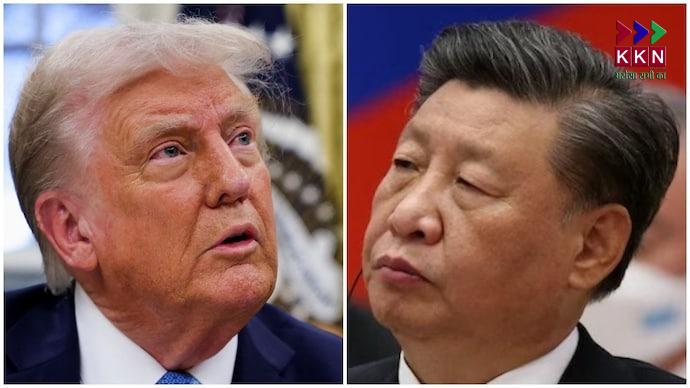
KKN Gurugram Desk | In the escalating trade war between the United States and China, a new front has emerged involving rare earth metals. In response to the Trump administration’s tariff attacks, China has imposed a significant restriction on the export of rare earth metals, which has shaken industries worldwide. This is no longer a mere tax battle—it’s now a conflict over technology, supply chains, and global dominance. The restriction is hitting American companies hard, particularly in electronics, automotive, and defense sectors, as many shipments of rare earth magnets have been held up in China. Given that the United States has limited backup stock of these metals, the country now finds itself in a vulnerable position, facing a potential setback in its industrial capacity. If the supply of these metals continues to be blocked, it could lead to substantial damage to the American industry.
Article Contents
What Are Rare Earth Metals?
Rare earth metals, despite the name, are not as rare as they sound. In fact, they consist of a group of 17 elements found in the Earth’s crust. However, these metals are challenging and expensive to mine and refine, making their extraction difficult and costly. Rare earth metals play a vital role in the production of numerous high-tech devices and systems, such as mobile phones, electric vehicles, MRI machines, fighter jets, missile systems, and a variety of other high-tech gadgets. Though more abundant than gold, these metals are difficult to extract, environmentally damaging, and come with a high financial cost for processing.
Why Does China Dominate the Rare Earth Metal Market?
China’s dominance in the rare earth metals market is not just about extraction. While the country accounts for 61% of the global production of raw rare earth metals, its real strength lies in its control over 92% of the refining process. In other words, most of the rare earth materials around the world are processed in China. This dominance can be attributed to several factors, including advanced technology, research, cheap labor, and substantial government subsidies.
In April 2025, China took a significant step by imposing export controls on seven rare earth metals and related products. This means that companies wishing to export these metals from China now require approval from the Chinese government. The move has raised alarms in industries across the globe, as countries that depend on China’s supply of rare earth metals now face uncertainty.
The Strategic Importance of Rare Earth Metals in the U.S.-China Trade War
The battle for rare earth metals has become a pivotal aspect of the U.S.-China trade war. In 2019, Chinese President Xi Jinping visited a factory in the southeastern city of Ganzhou, where blocks of gray metal were stored. During his visit, he remarked that “rare earths are a strategic resource.” This statement underlined the growing geopolitical significance of these metals, which are indispensable in the manufacturing of everything from smartphones to electric cars and high-tech machinery.
While rare earth metals can be found in the U.S., the process of extracting and refining them is far more expensive, challenging, and environmentally damaging. This is one of the main reasons why the U.S. cannot compete directly with China in the rare earths industry. In the case of tariffs, a direct counterattack can be made with another tariff, but when it comes to rare earths, the U.S. has very few options available.
How Is the U.S. Responding?
In response to China’s export restrictions, the Trump administration has directed investigations to determine whether tariffs can be applied to rare earth minerals as well. Additionally, the U.S. is working on building its own supply chain for rare earth metals—everything from mining to processing, all within the country. This move is aimed at reducing dependency on Chinese exports.
The U.S. Department of Defense has already invested over $439 million in initiatives to develop a domestic supply chain. One notable project is the USA Rare Earth plant in Texas, which is working on establishing a magnet production facility. Furthermore, a new company named Phoenix Telling is working on a technique to process rare earth metals without pollution, sourcing these metals from the U.S. and Canada.
Global Impact of China’s Restrictions on Rare Earth Metals
The recent export restrictions imposed by China on rare earth metals are having ripple effects across the globe. Industries that rely heavily on these metals are feeling the pressure, particularly in the U.S. and Europe.
1. Electronics Industry:
Rare earth metals are crucial in the production of electronic devices such as smartphones, laptops, and consumer electronics. The shortage of these materials could lead to delays in production, resulting in higher costs and slower market access for new technologies.
2. Automotive Industry:
The automotive sector, especially electric vehicle (EV) manufacturers, heavily depends on rare earth metals like neodymium and dysprosium for the production of powerful magnets used in electric motors. With China controlling a significant portion of the global supply, any disruption could harm the growth of the EV industry and slow down global efforts to transition to cleaner transportation technologies.
3. Defense Industry:
Rare earth metals are also critical in the production of defense technologies, including fighter jets, missile systems, and radar equipment. Any disruption in the supply of these materials could severely affect national security and defense capabilities, making it a strategic concern for the U.S. government.
How Will This Affect the U.S. and Global Supply Chains?
The restriction on rare earth metals is not just a trade issue; it’s a supply chain problem that extends far beyond the immediate impact on the U.S. and China. The global economy is deeply interconnected, and disruptions in the supply of these critical metals could have a cascading effect on numerous industries.
The U.S., in particular, faces challenges due to its limited stockpiles of rare earth metals. In the event that China continues to restrict or halt exports, the U.S. could be left without immediate alternatives, creating a significant industrial bottleneck. The growing tensions over rare earths also highlight the broader struggle for global influence and technological supremacy between the U.S. and China.
The Road Ahead: Possible Solutions and Alternatives
The United States is actively pursuing several avenues to mitigate the impact of China’s rare earth metal export restrictions:
-
Domestic Mining and Processing: The U.S. is working on establishing its own mining and refining facilities for rare earth metals, which would reduce dependency on Chinese imports. This would require significant investment in both technology and infrastructure, as well as overcoming environmental challenges associated with rare earth extraction.
-
Building New Supply Chains: The U.S. is also seeking to diversify its supply sources by partnering with other countries, such as Australia and Canada, which also have reserves of rare earth metals. In addition, technological advancements in the recycling of rare earths could play a key role in addressing future shortages.
-
International Cooperation: Countries like Japan and India, which are also highly dependent on China for rare earth metals, could potentially form a coalition to create alternative supply chains. International partnerships and agreements to secure a steady supply of these critical materials could reduce the reliance on China.
The battle for control over rare earth metals has emerged as a significant aspect of the ongoing U.S.-China trade war. As the U.S. faces increasing pressure from China’s export restrictions, it is clear that rare earths have become a tool of geopolitical leverage. The struggle for control of these essential materials goes beyond tariffs and taxes; it is now about securing technology, controlling supply chains, and asserting global dominance.
As the world moves toward a future dependent on high-tech devices, electric vehicles, and defense technologies, the stakes surrounding rare earth metals will only rise. The U.S. and its allies must take strategic steps to ensure that they are not at the mercy of China’s control over this critical resource. The coming years will likely see intensified competition, technological innovation, and geopolitical maneuvering as nations seek to secure their access to rare earth metals.


Discover more from
Subscribe to get the latest posts sent to your email.