



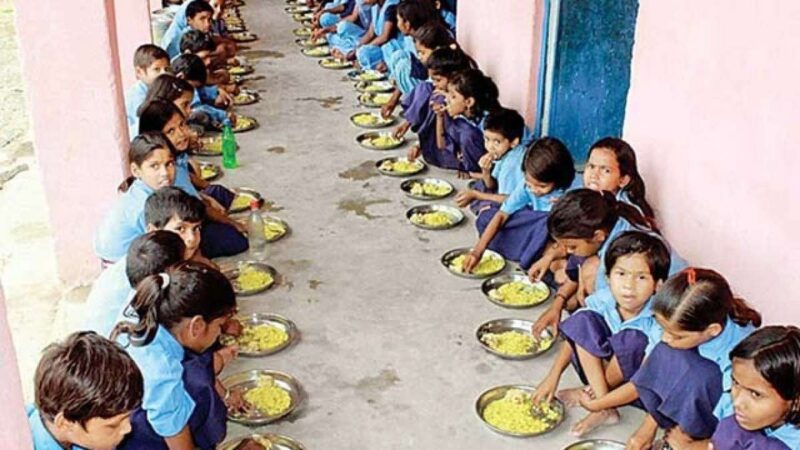
The midday meal scheme in Bihar once again came under serious scrutiny. On Wednesday, dozens of school children in Muzaffarpur fell ill after consuming the midday meal at a primary school in Pokhraira Bichla Tola. The incident highlighted alarming lapses in food safety and monitoring under the Midday Meal Programme.
Children reportedly complained of vomiting, stomach pain, and dizziness soon after eating the food. Teachers and staff rushed to take the affected children to the local Community Health Centre (CHC), where treatment was provided immediately.
Over 60 Children Taken Ill After Midday Meal
According to reports, 62 children were admitted to the CHC for treatment. Most of the students showed symptoms of food poisoning. Out of these, eight children were referred to Sri Krishna Medical College and Hospital (SKMCH) due to severe abdominal pain.
The remaining 52 students were discharged after receiving treatment and sent home. Medical authorities confirmed that the condition of the referred students remained stable but under close observation. Parents gathered in large numbers at the hospital, anxious about the safety of their children.
The Sequence of Events on Wednesday
Headmaster Ramesh Ram explained that the school was conducting its half-yearly examinations. Out of 102 enrolled students, 100 were present for the test.
After the first shift of the examination, students gathered to eat the midday meal. During this time, a lizard reportedly fell into the vegetable curry. Some of the food was thrown away after the contamination was noticed, but many children had already consumed the meal.
Within a short span, several students started complaining of stomach pain and dizziness. Teachers and school staff immediately arranged for transport to take the children to the CHC.
Students Describe Their Ordeal
Some of the children who fell ill shared their experiences. They mentioned that soon after eating, they felt uneasy and dizzy. A few reported nausea, while others experienced sharp abdominal pain.
Parents expressed anger and fear over the lack of hygiene and monitoring. Many stated that the safety of the midday meal must be prioritized as it directly affects the health of vulnerable children.
Official Response and Investigation Ordered
District Education Officer (DEO) Arvind Sinha confirmed that a lizard had fallen into the meal. He acknowledged that children became sick after consuming the contaminated food.
The DEO informed that strict action would follow. Both the District Programme Officer (DPO) and Block Education Officer (BEO) have been asked to provide explanations. A joint investigation has been ordered, with instructions to submit a detailed report within 24 hours.
Sinha admitted that there has been a lack of proper monitoring at the school level. He stressed that negligence in implementing the midday meal scheme cannot be tolerated.
Concerns Over Monitoring of Midday Meal Scheme
The midday meal scheme was designed to improve nutrition among school children. However, repeated cases of food contamination raise serious concerns about its implementation.
Experts say that the absence of proper quality checks, unhygienic cooking conditions, and insufficient monitoring are major problems. In rural areas, lack of infrastructure adds to the risks.
The Muzaffarpur incident shows that even a single lapse can put the lives of dozens of children in danger. Parents have demanded stronger oversight, regular inspections, and accountability from responsible officials.
Midday Meal Scheme and Past Incidents
This is not the first time that the midday meal programme has faced such controversy. Bihar has witnessed several cases in the past where children fell ill after consuming contaminated food.
Such incidents often involve unhygienic storage of grains, insects or reptiles falling into food, or lack of supervision during cooking. The scheme, while ambitious in scope, has been criticized for poor ground-level execution.
The government provides funds and guidelines for proper cooking and serving of meals. However, corruption, negligence, and lack of strict monitoring have frequently undermined the safety of the initiative.
Community Anger and Fear After the Incident
The parents and guardians of the affected children expressed outrage at the school authorities. Many questioned how a lizard could fall into food meant for young children.
Community members demanded accountability and immediate action against negligence. They also urged that the administration should ensure better safety standards in all schools. Fear and mistrust have spread among families, with many worried about sending their children back to school meals.
Importance of Food Safety in Schools
Nutrition plays a critical role in the growth and development of children. For many families in rural Bihar, the midday meal is an important source of nutrition for their children.
When such incidents occur, the trust in the system is shaken. Experts warn that repeated negligence could discourage parents from allowing children to avail the meals, which in turn could impact attendance in schools.
Strict enforcement of hygiene, regular inspections, and accountability mechanisms are urgently needed. Officials have promised stricter measures, but parents remain skeptical until concrete actions are visible.
The Way Forward
The Muzaffarpur midday meal scare highlights the urgent need for reform. Immediate steps should include training of staff, proper storage facilities, and safe cooking environments.
Independent monitoring teams could be appointed to carry out surprise inspections. Community involvement in checking the quality of food could also help. Transparency and accountability at every level are essential to restore confidence in the scheme.
Authorities have assured that the investigation report will be made public and action will be taken. However, families demand long-term solutions, not just temporary fixes.
The Muzaffarpur midday meal incident is another reminder of the fragile state of food safety in schools. With 62 children falling sick, including eight referred to SKMCH, the episode has once again exposed gaps in implementation and monitoring.
Officials have acknowledged negligence and promised swift action. Yet, parents and the public expect more than promises. They want guarantees that such incidents will not repeat.
The midday meal scheme is crucial for child nutrition and education in India. Ensuring its safety and effectiveness must be a top priority for administrators and policymakers. The Muzaffarpur case should serve as a turning point to enforce stricter standards, restore trust, and protect the health of millions of school children across the country.



Discover more from
Subscribe to get the latest posts sent to your email.


