


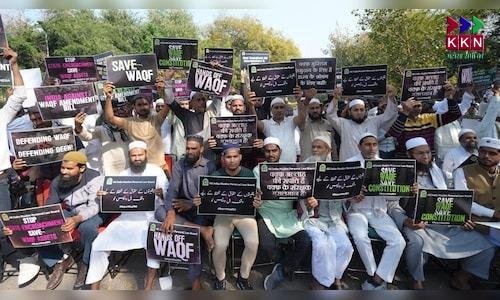
KKN Gurugram Desk | In New Delhi, today marks a significant protest against the Waqf Act as several Muslim organizations, including the All India Muslim Personal Law Board (AIMPLB), will come together to express their opposition to recent changes in the law. This protest, held under the banner of the ‘Save Waqf Conference,’ aims to raise awareness and challenge the amendments made to the Waqf Act, which have stirred controversy among many in the Muslim community. Here’s everything you need to know about the protest, the issues surrounding the Waqf Act, and what the future holds for Waqf properties in India.
Article Contents
The ‘Save Waqf Conference’ Protest: Muslim Organizations Unite in Delhi
Today, the capital city of Delhi will witness a large-scale protest led by various Muslim organizations against the controversial amendments to the Waqf Act. The ‘Save Waqf Conference,’ called by the All India Muslim Personal Law Board (AIMPLB), is set to be a major event, with representatives from Muslim organizations across the country attending. This gathering will not only focus on the legal challenges posed by the Waqf Act but will also include discussions about the broader implications for the Muslim community in India.
AIMPLB, which is one of the central bodies advocating for the protection of Muslim rights in India, has taken the initiative to organize this conference in an effort to challenge the recent modifications to the Waqf law. Political and social organizations, along with prominent leaders and legal experts, are expected to participate in the event to show solidarity with the cause.
Why the Protest Against the Waqf Act?
The amendments made to the Waqf Act have been met with significant opposition from various sections of the Muslim community. The Waqf Act governs the administration and management of properties donated by Muslims for religious and charitable purposes. These properties are generally used for maintaining mosques, madrassas, cemeteries, and other religious and social welfare purposes.
Muslim organizations, including the Jamaat-e-Islami Hind, argue that the recent changes to the Waqf law are detrimental to the interests of the Muslim community. They believe the amendments provide greater control to the government over Waqf properties, potentially undermining the autonomy of Muslim institutions in managing these assets. The protest aims to push for the repeal of these changes and demand that the Waqf properties be managed by the Muslim community, in accordance with their religious rights.
Key Players in the Protest: All India Muslim Personal Law Board and Jamaat-e-Islami Hind
The All India Muslim Personal Law Board (AIMPLB) has been at the forefront of organizing this protest. AIMPLB is a body that plays a significant role in addressing legal issues affecting Muslims in India, particularly those related to personal law and religious rights. The board’s involvement underscores the seriousness of the protest and the broader implications of the Waqf Act amendments.
Jamaat-e-Islami Hind, another influential Muslim organization, has also voiced its strong opposition to the changes in the Waqf Act. In a statement issued earlier this week, the organization called for the immediate repeal of the amendments. They also appealed to the public to support AIMPLB’s campaign against the Waqf law changes, emphasizing the importance of maintaining the community’s rights over its religious and charitable assets.
The Role of Waqf Properties and the Current Debate
Waqf properties are assets that have been donated by Muslims for charitable or religious purposes. These properties include mosques, madrassas, graveyards, and other community resources that serve religious or social welfare needs. The Waqf Board is responsible for managing and maintaining these properties, ensuring that they are used for the intended purposes.
The controversy surrounding the Waqf Act amendments revolves around the perceived encroachment on the rights of Muslims to manage their own properties. Critics of the law believe that the amendments could lead to the government’s increased involvement in managing these religious properties, which many feel should be controlled by the Muslim community itself.
The government, on the other hand, argues that these changes are necessary to ensure better governance and accountability in the management of Waqf properties. The amendments aim to address issues of mismanagement and corruption within Waqf institutions, but many Muslim organizations see this as an infringement on their religious autonomy.
Government’s Stance and the Supreme Court’s Role
The central government, in response to the ongoing protests, has assured the Supreme Court that no significant decisions regarding Waqf properties will be made until after May 5. This has provided some temporary relief to those protesting the amendments, as it indicates that the government is willing to reconsider its approach before taking any major action.
The government’s commitment to delay any major decisions allows time for discussions and protests like the ‘Save Waqf Conference’ to continue, ensuring that the voices of Muslim organizations are heard. The matter is expected to be closely monitored by the Supreme Court, which will likely play a significant role in determining the future of Waqf properties in India.
What Does the Future Hold for Waqf Properties?
The future of Waqf properties remains uncertain, as the legal and political landscape continues to evolve. The ongoing protests and the debate surrounding the amendments to the Waqf Act highlight the deep concerns within the Muslim community regarding the management and control of religious assets. If the amendments are not repealed, it could set a precedent for greater government intervention in the affairs of Muslim religious institutions, potentially undermining the community’s ability to independently manage its resources.
The outcome of this issue will likely depend on the government’s willingness to engage in dialogue with Muslim organizations and consider their concerns. The Supreme Court’s decision in the coming weeks will also be pivotal in determining the direction of the legal battle over Waqf properties.
The protest against the Waqf Act amendments is more than just a legal battle; it is a fight for the religious rights and autonomy of the Muslim community in India. The ‘Save Waqf Conference’ and the involvement of key Muslim organizations such as the All India Muslim Personal Law Board and Jamaat-e-Islami Hind reflect the determination of the community to safeguard its religious and charitable assets.


Discover more from
Subscribe to get the latest posts sent to your email.