

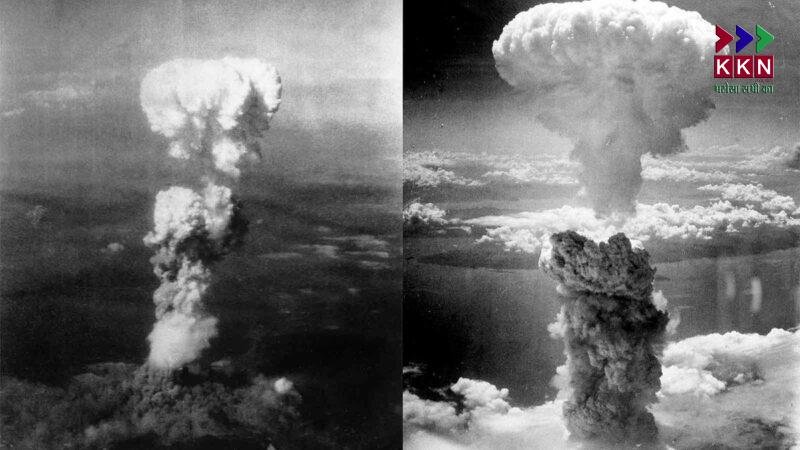
KKN Gurugram Desk | In a chilling and sobering analysis, Annie Jacobsen, a renowned investigative journalist and expert on nuclear war, has warned that a full-scale nuclear war could wipe out up to 5 billion people in just 72 minutes. Jacobsen, who has extensively studied the ramifications of nuclear warfare, describes a world where the aftermath of a nuclear conflict would lead to catastrophic global destruction, affecting not just the immediate areas of conflict but the entire planet. Her dire predictions indicate that only two countries would survive the aftermath of such a devastating war, while the rest of the world plunges into a terrifying new era.
Article Contents
Global Catastrophic Effects of Nuclear War
Jacobsen’s warnings come from her expertise in nuclear warfare and the research she has conducted, often citing historical studies and work done by scientists in the 1950s and 1960s. In a recent podcast appearance on the Diary of a CEO, she highlighted the significant impact of nuclear explosions, not only in terms of the immediate fatalities but also the long-term environmental effects that could devastate human civilization. According to Jacobsen, the environmental consequences of a nuclear war are far more severe than the initial explosions, leading to global climate collapse and widespread environmental destruction.
In this scenario, the world would experience a phenomenon known as nuclear winter, which would see the planet covered in a thick layer of ice and snow. This drastic cooling of the Earth would result from the immense amount of smoke, soot, and particles released into the atmosphere from the explosions, which would block out sunlight. This would lead to a significant drop in global temperatures, making it impossible for crops to grow, and the food supply would be destroyed. Jacobsen further explains that the cooling effect would be so extreme that humans would struggle to survive, as the temperature would plummet beyond what is tolerable for most living organisms.
The Breakdown of the Global Ecosystem
The primary concern with a nuclear war is the destruction of the ozone layer, which shields the Earth from harmful ultraviolet (UV) radiation from the sun. Jacobsen refers to the research conducted by atmospheric science expert Professor Brian Toon, who has stated that the ozone layer would be so damaged after a nuclear conflict that sunlight itself would become lethal. The destruction of the ozone layer would result in dangerous levels of UV radiation reaching the Earth’s surface, making outdoor exposure a fatal risk for anyone caught in the open.
In addition to the environmental destruction, radiation from nuclear fallout would make the surface of the Earth unsafe for humans. Jacobsen explains that survivors of the initial blasts would likely have to live underground to avoid radiation exposure. The scarcity of food would also drive people to desperate measures, and humanity would face the terrifying prospect of fighting each other for survival.
The Fate of the Human Race: Only Two Countries Will Survive
Despite the bleak outlook for most of the planet, Jacobsen points to New Zealand and Australia as the only two countries that would likely survive the effects of a nuclear war. She explains that these countries’ geographical location and stable climate would shield them from the extreme cold resulting from nuclear winter. Their remote location in the southern hemisphere and relative isolation from the direct fallout of a global nuclear conflict would allow them to maintain food production systems, making them the only places where life could continue, albeit in a severely altered form.
Professor Brian Toon, whose research Jacobsen references, also agrees with this assessment. He states that Australia and New Zealand are in a unique position due to their geographical distance from potential nuclear targets in the northern hemisphere. Their favorable conditions would allow them to recover more quickly and support their populations by maintaining a stable agricultural system. These countries would serve as the last refuge for humanity, where survivors could potentially rebuild civilization after the global devastation.
The Environmental and Human Impact of Nuclear War
Jacobsen’s analysis underscores the profound and far-reaching effects of nuclear war, not only on the immediate survivors but also on the global environment. The aftermath of a nuclear conflict would lead to:
-
Global Cooling: The blocking of sunlight by soot and debris would cause a drastic drop in temperatures, resulting in a nuclear winter. This cooling would make it impossible for crops to grow, leading to widespread famine.
-
Destruction of the Ozone Layer: The loss of the ozone layer would allow harmful ultraviolet radiation to reach the Earth’s surface, causing severe health risks, including skin cancer and eye damage.
-
Radiation Fallout: The radiation from nuclear explosions would contaminate vast areas, making them uninhabitable for generations.
-
Food Scarcity: With the destruction of agriculture and ecosystems, food would become scarce, and survivors would face the challenge of finding enough resources to sustain themselves.
-
Global Social Collapse: The social order would likely collapse as nations and communities scramble to find food, shelter, and safety. The threat of violence and competition for resources would increase, further exacerbating the humanitarian crisis.
The End of Civilization as We Know It
Jacobsen’s predictions paint a chilling picture of a world where human civilization could be permanently altered by the sheer devastation caused by a nuclear war. The combination of environmental destruction, social collapse, and the breakdown of global infrastructure would make it extremely difficult for humanity to recover. The few survivors would have to endure extreme conditions, and the rebuilding of society would be an incredibly challenging and uncertain process.
The impact on the global economy, infrastructure, and quality of life would be unprecedented. Nuclear war would not just affect the countries involved in the conflict but would also have global repercussions. The interconnectedness of the world’s economies, supply chains, and infrastructure means that the entire planet would suffer from the consequences of such a catastrophic event.
Preventing Nuclear War: The Need for Diplomacy and Disarmament
Jacobsen’s warnings about the potential for global destruction underscore the critical need for international cooperation, diplomacy, and efforts toward nuclear disarmament. The threat of nuclear war remains one of the most pressing issues facing humanity today, and it is crucial for nations to work together to prevent such a catastrophic event from occurring. International treaties, such as the Treaty on the Non-Proliferation of Nuclear Weapons (NPT), have made strides in limiting the spread of nuclear weapons, but much more needs to be done to ensure global security.
In addition to disarmament, diplomatic efforts must focus on conflict resolution, building trust among nuclear-armed nations, and fostering international cooperation to avoid misunderstandings and escalation. The world must prioritize peacebuilding and security to avoid the devastating consequences that a nuclear war would bring.
Annie Jacobsen’s chilling assessment of the potential aftermath of a nuclear war serves as a stark reminder of the fragile state of global peace and security. The catastrophic effects of nuclear conflict would not only lead to the immediate loss of billions of lives but also result in a long-term environmental and social collapse that could permanently alter the course of human history.